

What is an insight, actually?

Every business, from budding startups to Fortune 500 companies, (should) agree on one thing: insights are crucial for building and running a successful business.
However, the term 'insight' is often misused - many so-called insights lack the depth needed to drive meaningful business decisions. This lack of a clear definition dilutes what can be truly insightful. If we can't clearly define what an insight is, how can we use it to guide our strategies and advance our businesses?
What an Insight Is Not
To make things clear, let’s look at what an insight is not
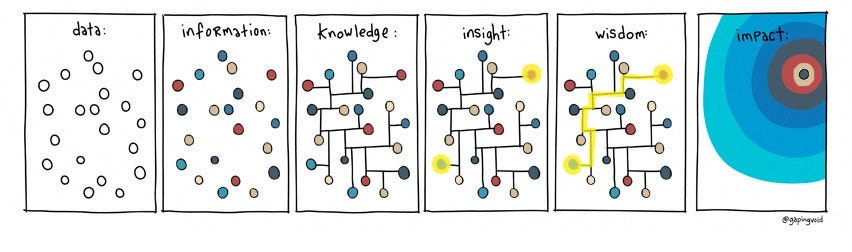
- Data: Data is essential but it is not an insight by itself. It provides the raw details, like flour in a cake, but without analysis, it doesn't tell us what to do next.
- Observations: Simply noting behaviors or trends does not make an insight. These observations miss the critical 'why'—the motivations behind actions.
- Customer Wishes: Ill skip the ‘faster horses’ analogy here, but just because a customer wants something doesn't mean it provides us with a genuine insight. It's crucial to understand the deeper needs behind their requests, which can lead to more meaningful solutions.

Defining an Insight
There are plenty of definitions as to what an insight is, but among others, an insight could be defined as as a discovery about the underlying motivations that drive people’s actions.
Arriving at this discovery and definition is a demanding process. Insights don’t simply appear; they require deliberate effort. You must actively gather data, observe, and synthesize this information collaboratively. This creates a collective understanding of your customers and their needs, which is essential for insightful analysis.
While it may be tempting to seek quick answers from a large language model, engaging directly with your product team to empathize, define, and ideate around customer insights is far more effective. Relying solely on technology, such as inputting customer data into tools like ChatGPT, cannot replace the value of in-person collaboration. Engaging deeply with the material yourselves not only brings your team closer to the customer but also fosters the generation of more innovative and relevant ideas.
The Elements of a Customer Insight
A useful customer insight includes several key parts:
- Context: Describe the setting and typical behaviors of your target persona. This background sets the stage for the insight.
- Problem: Identify the obstacles that prevent customers from achieving their goals. Insights often come from understanding these challenges, which you can uncover through direct interaction and empathy.
- The Why: Knowing a problem is not enough; understanding why it exists is the most important aspect in your insight gathering. This often means discovering underlying issues that your customers might not even be aware of.
- Motivation: Figure out what drives your customers' behaviors. Are they motivated by gaining something or avoiding pain? This understanding influences how you develop solutions.
- Desirable End Outcome: Know what your customers ultimately want to achieve. Start with the customer's point of view and describe their ideal situation.
Creating Insightful Statements
To turn understanding into action, frame insights as customer-centric statements. Here’s how:
Remember, write in the first person from the consumer's perspective to connect with them emotionally. Be honest, human, and avoid jargon. This is not a sales pitch, so keep it objective and unbiased. This is especially important if you plan on validating your insights later.
Sentence 1: Describe the current situation and the usual way the customer handles it.
Example: "Managing my business finances feels overwhelming with spreadsheets. I spend hours manually entering data and chasing down receipts."
Sentence 2: Describe the problem this situation creates for the customer. Why is it frustrating?
Example: "This constant data entry and chasing receipts keeps me from focusing on what truly matters – growing my business."
Sentence 3: Describe the customer's ideal solution. What would make their life easier?
Example: "An easier way to track income and expenses would free up my time and give me a clearer picture of my financial health. With that knowledge, I could make better decisions about my business."
How to Know if an Insight Is Valuable
Creating a few insights is a great start, but how do we know we have created something truly “insightful”? To test whether your insight statement will genuinely help your customers and foster innovation, consider these questions:
- Does the insight resonate with customers, making them feel understood? Can they say “you really understand me!”
- Does it challenge and possibly redefine existing beliefs and strategies?
- Does the insight inspire actionable steps and drive change?
- Does it clearly indicate what to do next, providing a roadmap for adding value to the customer experience?
- Can the impact of the insight be validated through customer feedback or performance metrics?
Turning Insights into Actions
Simply having a document full of insights that sits unused is just as ineffective as never having generated those insights at all. What truly matters is the application of these insights. You must take each insight, develop actionable ideas from it, and then execute these ideas. Remember, the broader goal is to impact your business positively.
Think of the process in these straightforward steps:
- Insight Statement (Question): Clearly define a customer problem or need.
- Idea Generation (Answer): Craft solutions that address the insights.
- Product Development (Solution): Build these ideas into real products that enhance customer experiences.
Unlocking meaningful insights is key to crafting successful strategies, whether you're at a startup or a multinational corporation. The process of identifying these insights requires diligent effort—collecting data, observing trends, and deep analysis—but the payoff is substantial, leading to more informed decisions and innovative solutions.
If you’re interested in deepening your insight discovery or want help facilitating productive ideation sessions, feel free to get in touch. We’re here to help you turn deep insights into great products.