Case study


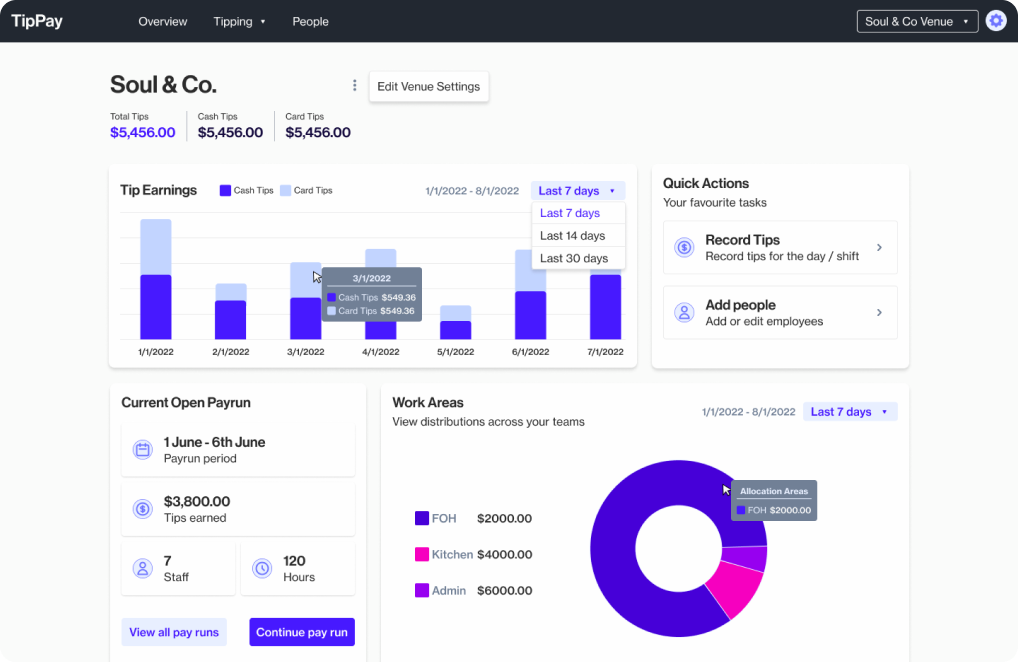
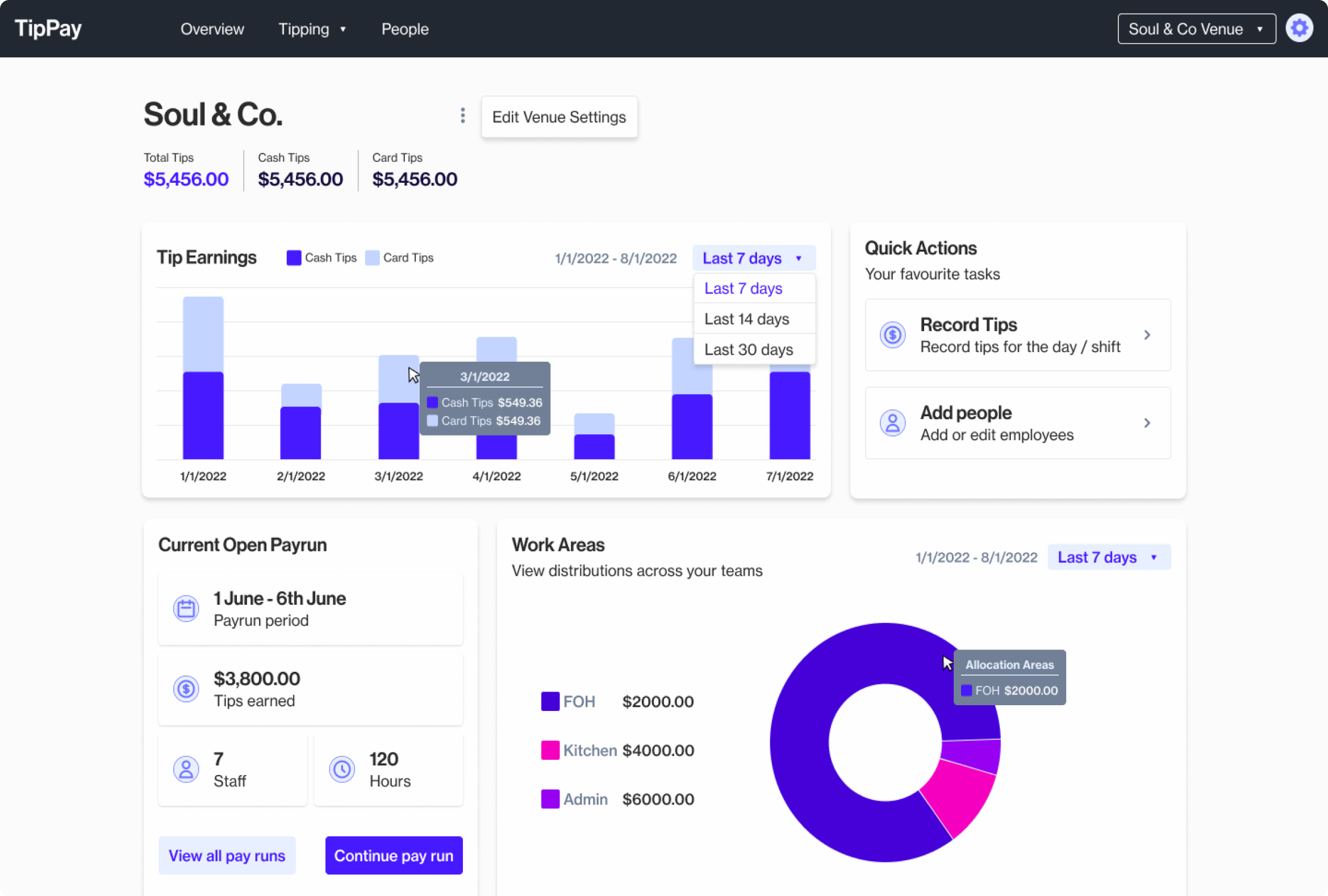
Tip Pay is a digital payments platform that allows instant and transparent distribution of cashless payments directly to team members mobile devices.
Problem
With the rise of digital payments over the past decade, cash is becoming increasingly scarce, and in some cases, harder to use. Since Covid-19, many venues no longer accept cash as a form of payment. Though this may be seen as a natural evolution, for many workers, particularly in service and hospitality positions, the reduced circulation of cash has meant a significant reduction in tips, which traditionally form a large part of their livelihood.
Solution
With the rise of digital payments over the past decade, cash is becoming increasingly scarce, and in some cases, harder to use. Since Covid-19, many venues no longer accept cash as a form of payment. Though this may be seen as a natural evolution, for many workers, particularly in service and hospitality positions, the reduced circulation of cash has meant a significant reduction in tips, which traditionally form a large part of their livelihood.
Process
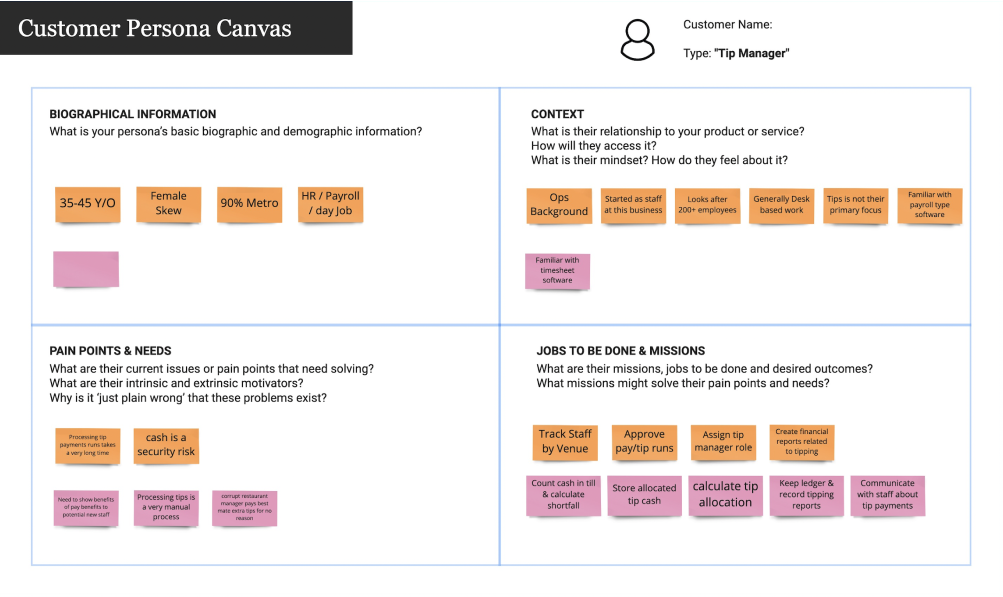
This project was more or less a blank slate. Starting with an idea, a name and industry expertees from the board of directors, I was initially asked to validate the desirability of the tip pay concept before we would continue into a second stage gate.Beginning with stakeholder interviews (my clients), I established the general concept of the TipPay platform, as well as the ideal customer or user persona. From here I was able to formulate questions I could take to the customers, who were the owners or general managers of hospitality venues
The first step was to understand the current-state tipping process. Speaking with staff across multiple venues, I established the common steps of the tipping process which applied to all venues – with different paths for variations in the process based on the venues preferences in tipping style
Problem
This project was more or less a blank slate. Starting with an idea, a name and industry expertees from the board of directors, I was initially asked to validate the desirability of the tip pay concept before we would continue into a second stage gate.Beginning with stakeholder interviews (my clients), I established the general concept of the TipPay platform, as well as the ideal customer or user persona. From here I was able to formulate questions I could take to the customers, who were the owners or general managers of hospitality venues.
The first step was to understand the current-state tipping process. Speaking with staff across multiple venues, I established the common steps of the tipping process which applied to all venues – with different paths for variations in the process based on the venues preferences in tipping style.

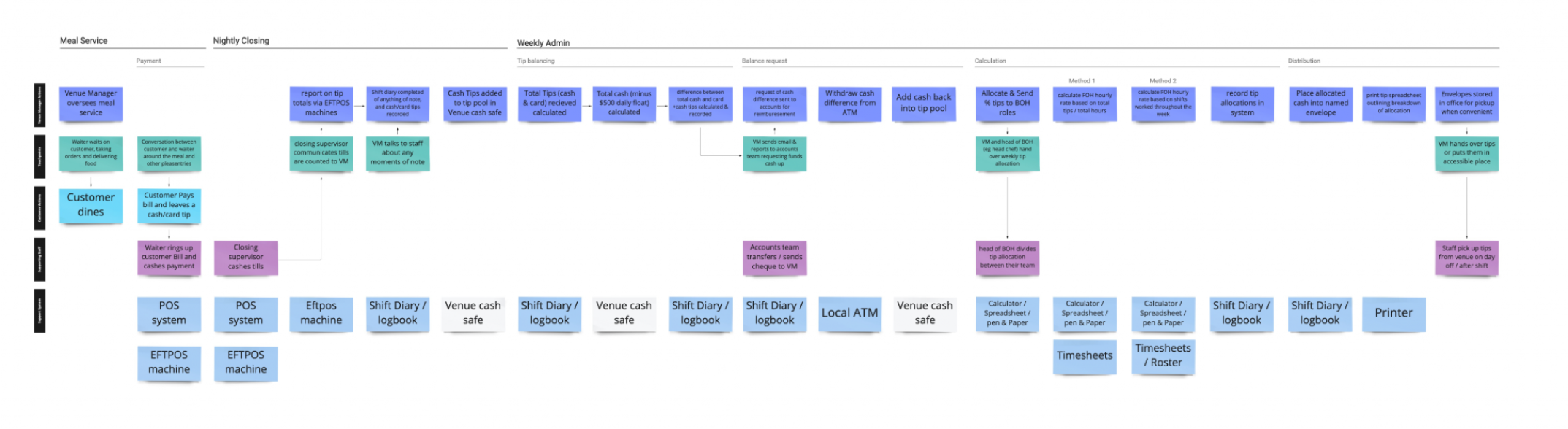
This service blueprint allowed our team to understand the tipping process as is, and ask probing questions around the specific steps, and most importantly, pain points in the process. Not surprisingly, the most common pain point was that staff simply aren’t receiving enough tips!
Following our interviews, a clickable prototype design was created for testing the concept using Figma. This provided great feedback on some of the usability issues in the prototype which were easily fixed, however the general consensus was that the product would help restaurant managers manage their tipping processes and save time.
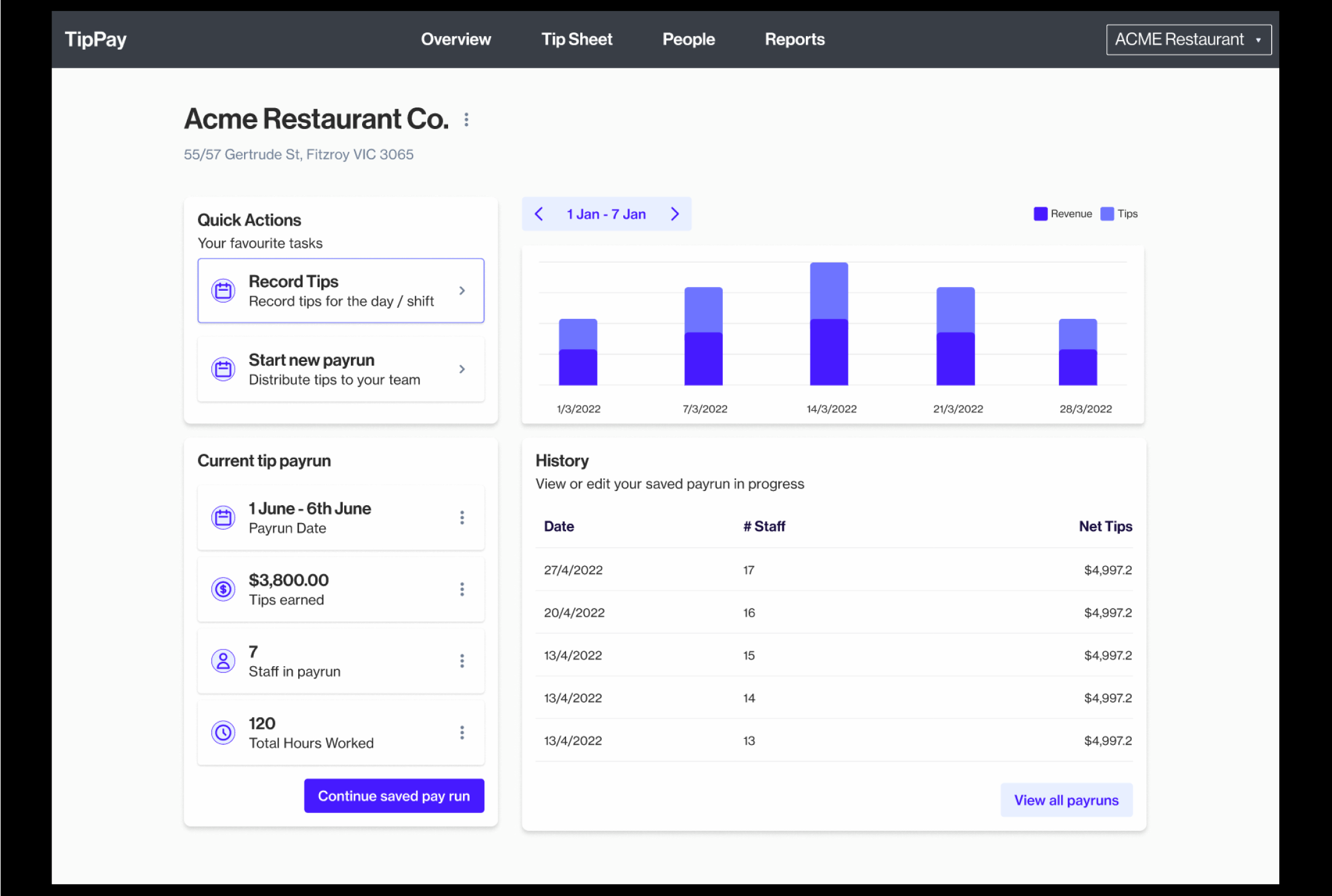
Feel free to play with the clickable prototype embedded below – the goal for this prototype is to deliver a tip pay run.
Brand development & Design system
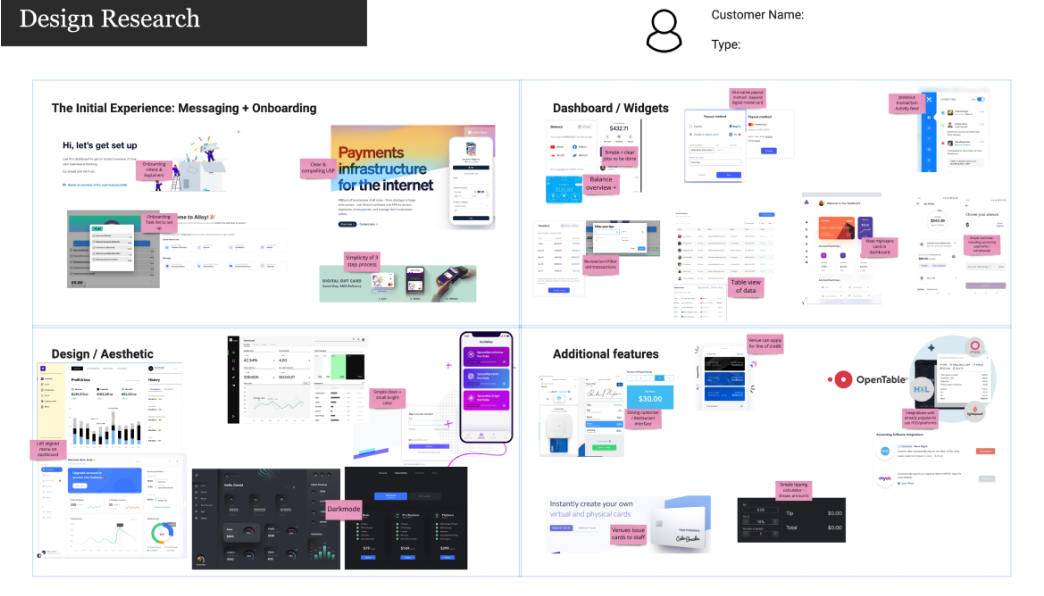
MVB – Minimum viable brand
With the rise of digital payments over the past decade, cash is becoming increasingly scarce, and in some cases, harder to use. Since Covid-19, many venues no longer accept cash as a form of payment. Though this may be seen as a natural evolution, for many workers, particularly in service and hospitality positions, the reduced circulation of cash has meant a significant reduction in tips, which traditionally form a large part of their livelihood.
Design system
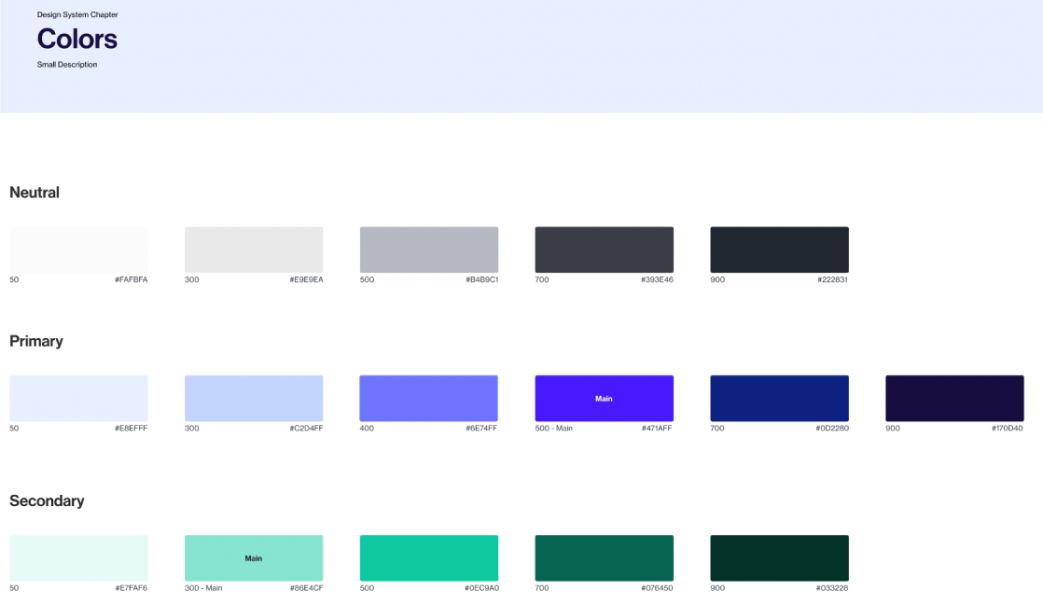
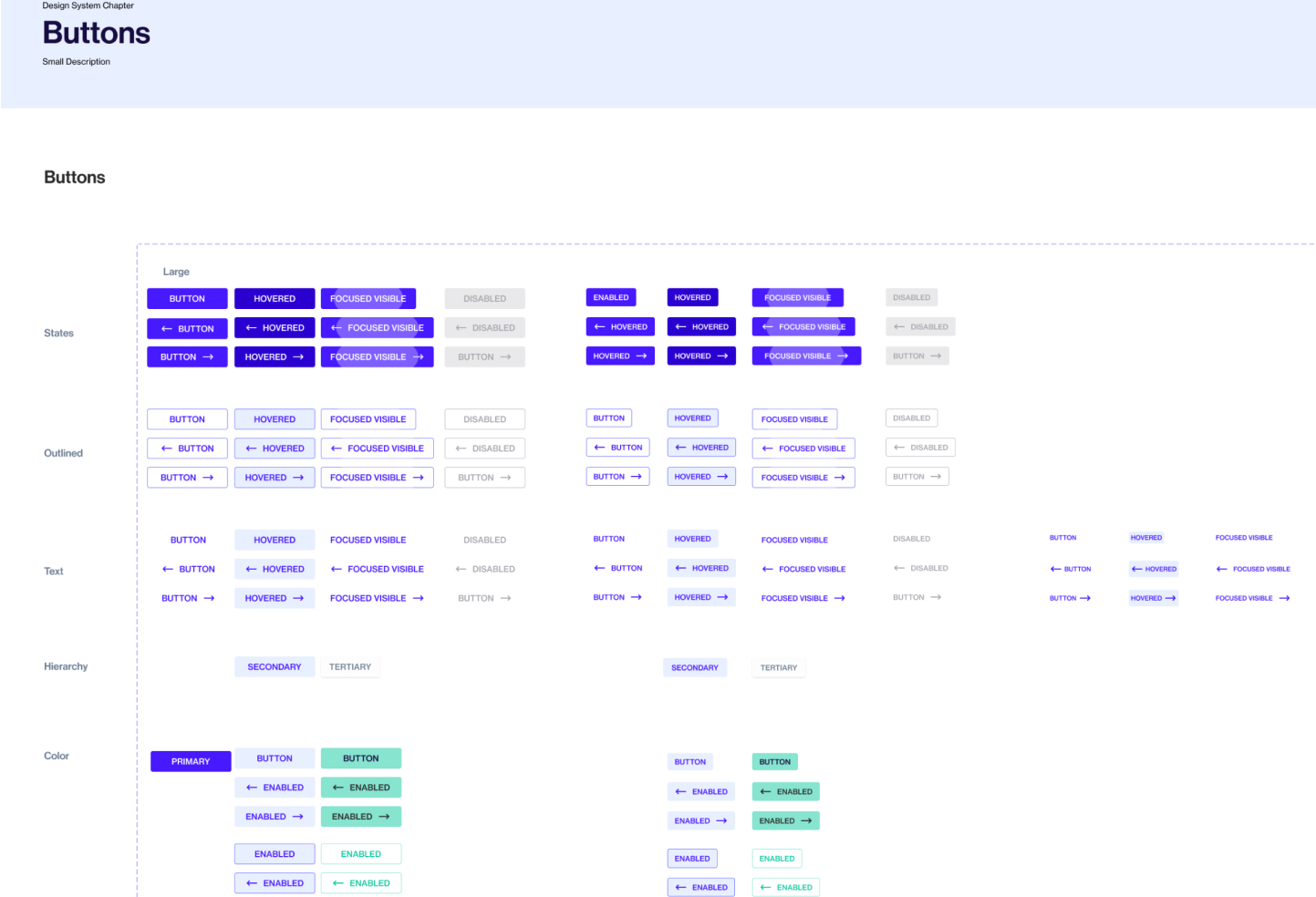
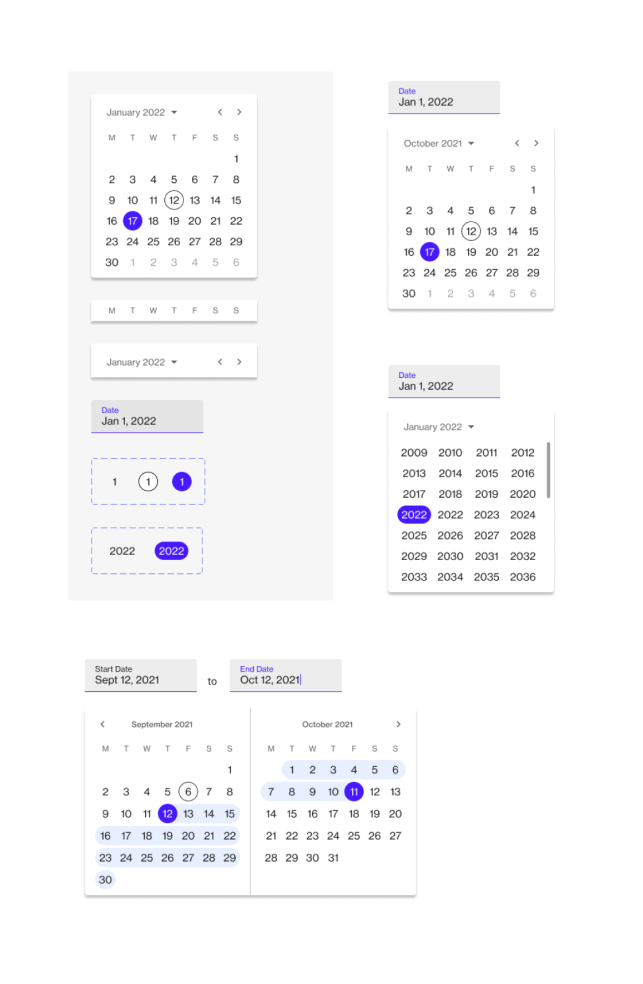
In order to build a product that would scale, I opted for a molecular design approach built upon an established framework – the material design system. This approach meant that our developer could utilise an established react framework and start building almost instantly. More importantly however, the component interactions and functionality would follow the material design guidelines meaning every element would benefit from thousands of hours of google-backed research that lives inside every material component.
Product Overview
Tip Pay is a digital payments platform that allows instant and transparent distribution of cashless payments directly to team members mobile devices.
The tip sheet was the most complex part of the entire product. We had to find a balance between a simple and aesthetic design, which also improved the experience for a venue manager trying to calculate tips at the end of the night. Making a simple yet powerful UI was a complex task, built on inspiration from calendars, schedules and even (dashboards), as well as hours of user feedback, and redesigns
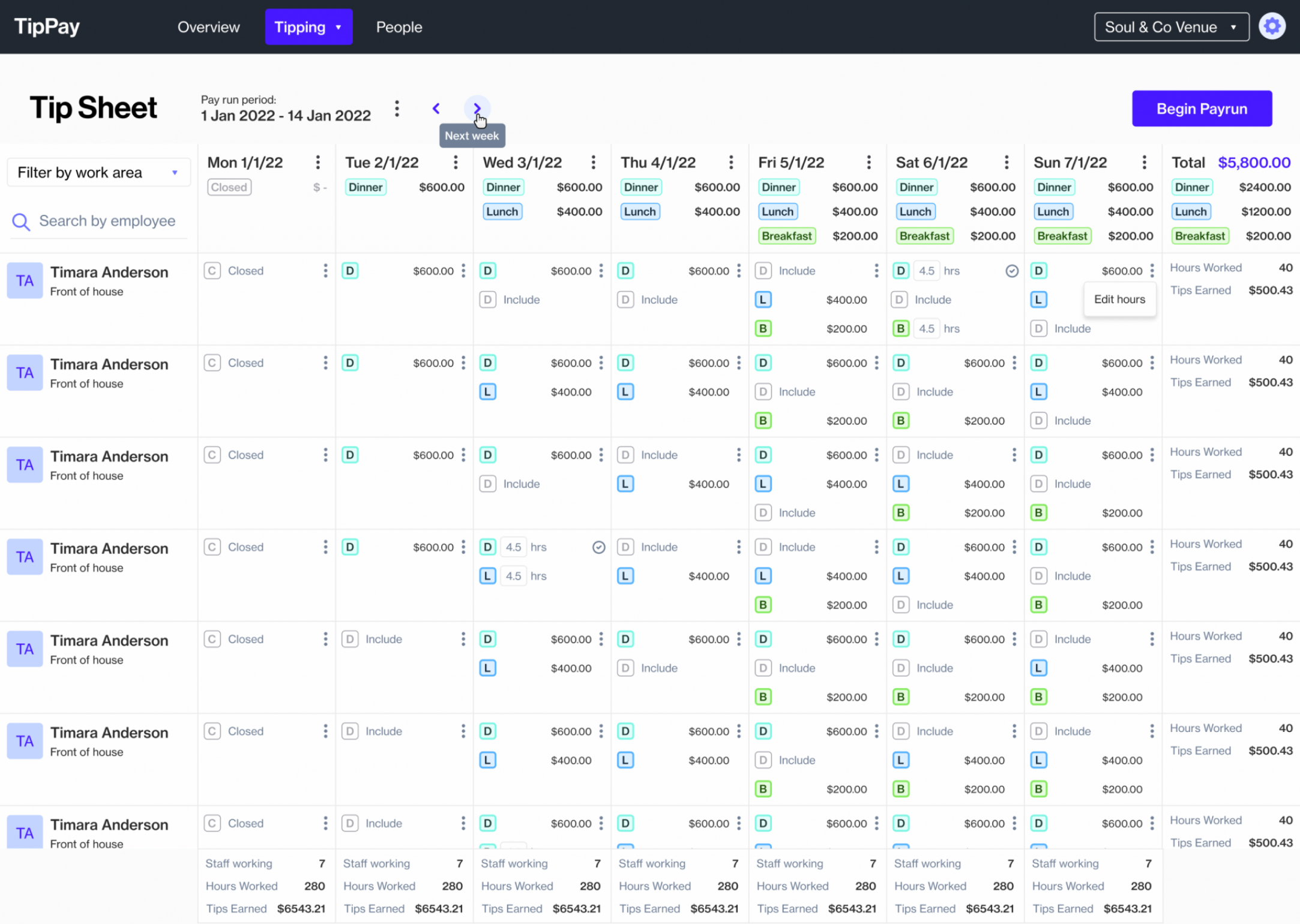
The final UI for the tip sheet was a calendar-like interface, which gave users a weekly view, intersecting with each staff member of the business. Each user/date cell contains the available shifts that day, which are themselves buttons – a quick and easy way to select whether someone was working on the shift. This cross section makes identifying staff and their corresponding shifts a quick task, which is crucial especially when this is a task performed each day in nearly every venue in the world.
Challenges
Creating an entire product in a 3 month timeframe is a challenge in and of itself, however an equally significant challenge was the team size. Given the project team was essentially me, a developer and the part time stakeholders, my role was a blend of UI designer, UX designer / researcher and Product owner – making key decisions on the product in lieu of client feedback.
Results
The end result was a fully functional prototype which allows a very flexible and efficient process to tipping. The app is only in MVP as it is tested across a small number of venues to gather feedback, however this is an ongoing process I am managing, and ensuring the feedback is implemented before we move into Beta testing.